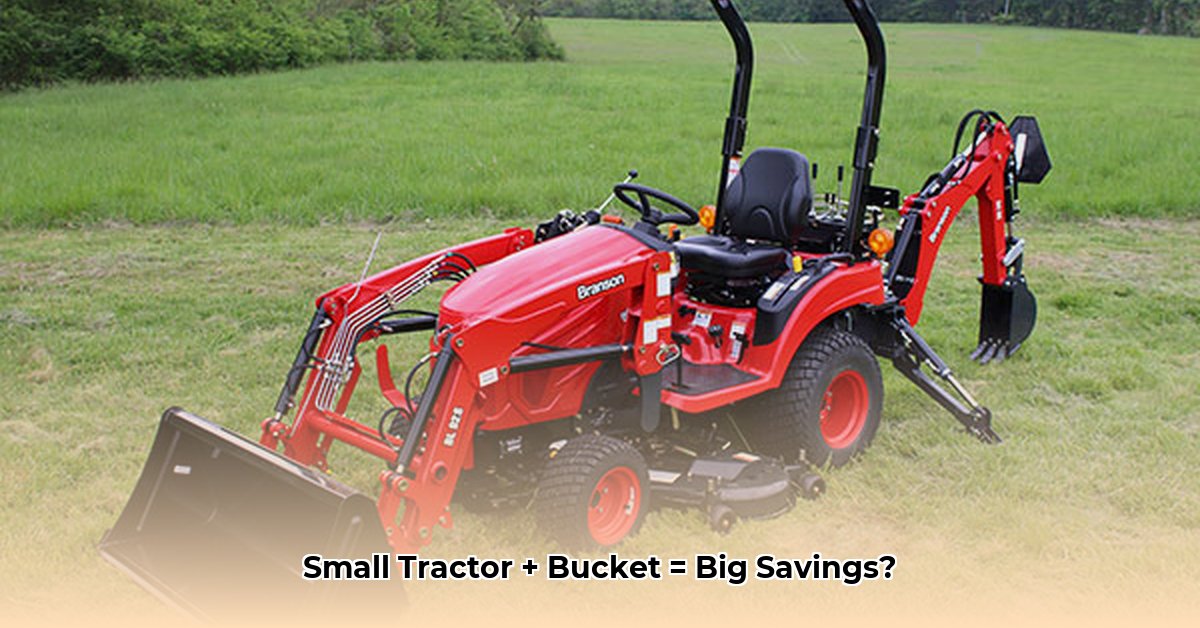
Matching Your Tractor to Your Tasks: Size Matters
Choosing the right small lawn tractor with a bucket hinges on your specific needs. A small garden requires a different tractor than a larger orchard or farm. Before you begin your search, assess:
- Land size: How much acreage will the tractor cover?
- Tasks: What jobs will it perform (e.g., moving soil, hauling wood, light tillage)?
- Frequency of use: How often will the tractor be operated?
Smaller operations benefit from sub-compact tractors, offering maneuverability and fuel efficiency, ideal for navigating tight spaces. Larger operations need more powerful machines capable of handling heavier loads, though these tend to consume more fuel and might be less agile in confined areas. Do you need a nimble sports car or a dependable workhorse? The answer shapes your choice. For more information on Kubota options, check out this helpful resource: Kubota Tractor Models.
Bucket Capacity and Lifting Power: Avoiding Overloads
The bucket's size and the tractor's lifting capacity are crucial. A small bucket means more trips; a bucket that's too big overloads the tractor, creating a dangerous situation. Before purchasing, determine the heaviest materials you'll move (compost is lighter than rocks). Always ensure the tractor's specifications comfortably accommodate the anticipated weight. Never exceed the maximum stated weight.
Fuel Efficiency and Environmental Impact: Sustainable Choices
Sustainable farming demands minimizing environmental impact. Fuel efficiency plays a vital role. Diesel tractors often offer better fuel economy for heavier tasks, but modern diesel engines are cleaner than older models. Some manufacturers explore alternative fuels (e.g., biofuels). Compare fuel consumption and emission levels; lower fuel use translates to lower costs and a reduced environmental footprint.
Maintenance and Long-Term Costs: The Hidden Expenses
The initial cost isn't the only factor. Maintenance is essential, and some tractors are easier and cheaper to maintain than others. Consider parts availability – local dealers ensure quicker repairs. Research the tractor's lifespan; a cheaper tractor might become more expensive long-term due to frequent repairs or parts scarcity.
Comparing Popular Small Lawn Tractors with Buckets
The following table compares generalized models; check manufacturer websites for specific details. Always confirm the most up-to-date specifications before making a purchase decision.
| Feature | Model A | Model B | Model C |
|---|---|---|---|
| Horsepower | 25 | 25 | 45 |
| Lifting Capacity (lbs) | Varies (check specs) | Varies (check specs) | Higher |
| Fuel Efficiency | Good | Good | Moderate |
| Maneuverability | Excellent | Excellent | Good |
| Approximate Price (USD) | Moderate | Moderate | Higher |
Your Step-by-Step Guide to Tractor Selection
- Assess your needs: Define farm size, tasks, and maximum load weight.
- Research and compare: Explore models; read online reviews.
- Get quotes: Obtain quotes from multiple dealers to compare prices and financing.
- Test drive (if possible): Hands-on experience is invaluable.
- Read online reviews: Independent user feedback offers valuable insights.
- Make your decision: Choose the tractor that aligns with your budget and needs.
Weighing the Pros and Cons
Advantages:
- Versatility: Many attachments expand the tractor's functionality.
- Efficiency: Boosts efficiency compared to manual labor.
- Maneuverability: Great for tight spaces.
- Cost-effectiveness (for smaller operations): Offers a good balance of capabilities and cost.
Disadvantages:
- Limitations (Large farms): Lack power for extensive operations.
- Attachment Costs: Attachments raise the overall expense.
- Maintenance: Regular upkeep is vital; factor this into the budget.
Choosing the right small lawn tractor with a bucket affects your farming operation significantly. Thorough research, consideration of long-term costs, and informed decision-making are key to success. Happy farming!